
A New Kingdom

HIGHLIGHT

Colossians 1:13–14 (ESV): 13 He has delivered us from the domain of darkness and transferred us to the kingdom of his beloved Son, 14 in whom we have redemption, the forgiveness of sins.

EXPLAIN

A problem with our theology today is that we have made the Gospel all about us. While we may decry those who teach a salvation that is similar to fire insurance, we may also present a picture of the Good News that is much smaller and less encompassing than it truly is.

When John the Baptist began his ministry, he preached, 2 “Repent, for the kingdom of heaven is at hand” Matthew 3:2 (ESV). Likewise, when Jesus began his ministry he preached, “Repent, for the kingdom of heaven is at hand” Matthew 4:17 (ESV).

Notice the different emphasis than what is often preached today. Did Jesus say, “Repent, because your life has no eternal purpose”? Did he teach “Confess your sins because you are going to Hell”? Yes, both of these statements are true for the unbeliever. But do these statements accurately represent the focus of Jesus’ preaching and teaching ministry?

Yes, oftentimes we will preach about getting ready because we are in the last days. We encourage people to turn from sin so they will not be left behind to suffer during the Great Tribulation when God brings judgment on the world and Satan rules over earth with few limitations. This is a valid reason for people to consider their ways and turn to God, but does this represent the meaning of Jesus’ challenge to repent for the kingdom of heaven was at hand?

When Jesus said that the kingdom of God was at hand, he was telling the people that the rule of God was near, and that they needed to surrender themselves fully to God’s plan for the world. You see, beginning with Adam and Eve’s sin in the Garden, the world has been in rebellion against God and part of the kingdom of Satan. Christ came to rescue us from that dark domain of sin and slavery and give us freedom and hope.

Paul painted a vivid word picture in Colossians 1:12-14 as he reflected the Gospel. In verse 12, he pictured the saints – the people of God – as living in light. Then he wrote: 13 He has delivered us from the domain of darkness and transferred us to the kingdom of his beloved Son Colossians 1:13 (ESV). In our sin, we were like soldiers of an evil kingdom, blinded in our hearts and minds as to the wickedness of our ruler and our own actions.

Jesus Christ came to rescue us, even though we were actively his enemies, revealing to us our sinfulness and slavery to sin, enabling us to defect from the kingdom of the world to the kingdom of heaven. The result of that defection, along with our recognition and repentance of sins, is redemption, the forgiveness of sins. Jesus’ blood, shed on our behalf, purchases our freedom from the domain of darkness and gives us an inheritance with the saints in light!

APPLY

The Gospel, understood in this way, is not merely about “getting saved so you don’t go to Hell”, even though this is a major benefit of the Good News. Rather, the Gospel is about the kingdom of God coming into this world. The Gospel releases us from captivity to sin and Satan, and restores us, making us new creations in Christ Jesus who share hope, life, freedom, and restoration to others.

What amazing good news this is! In sin we were trapped. We had no goodness within us that could make us fit to be near God. We had no way of escape, no hope. But God came to us. He took the the first step! And because he did, life will never be the same for us.

We no longer belong to sin, Satan, or this world. Our citizenship has been transferred. Our allegiances have changed. We wear robes of white instead of the garb of darkness.

Is this clarification of the Gospel a splitting of hairs?

I don’t think so. When we teach a salvation that is all about “us” – be saved so you don’t go to Hell – I am afraid we do a disservice to both God and the unbeliever. God’s salvation is for the person who is ready to forsake their sin and become his obedient follower. The person who only wants assurance of not going to Hell is truly focused only on their own needs and concerns. Yes, the sinner praying to accept Christ is not making as deep a commitment as what we see the believer making when he or she is entirely sanctified. But the divorce of Christ’s lordship from Christ’s salvation is unbiblical.

In fact, this kind of cheap grace seems to dominate the understanding of too many about the Gospel. As long as they have said a prayer or have been baptized with water at some point in their life, some feel they are saved and alright with God – even if their life does not show consistent evidence of salvation. I am reminded of the “half Christians” of early American history. Such belief and lifestyle is dangerous – it gives false hope to those who are deluded by it and it creates disillusionment in those looking on, who see hypocrisy instead of holiness.

And so I would argue that we desperately need an understanding of a Gospel in which the rule of God breaks into our world, redeeming us from sin and dramatically changing us from being captive soldiers of darkness to free soldiers of the Light.

RESPOND

Heavenly Father, thank you for your great grace that rescues us from the domain of darkness, transferring us to your kingdom. Thank you for saving us from sin. Help us to live as citizens of the Kingdom of Heaven, even while we physically abide in this world. I pray this in Jesus’ name, Amen.
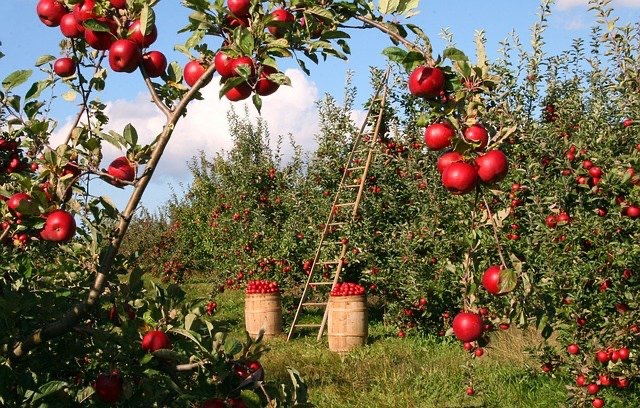

The kingdom of God is fruitful

HIGHLIGHT

Luke 13:9 (ESV): 9 Then if it should bear fruit next year, well and good; but if not, you can cut it down.

EXPLAIN

This chapter begins with some people telling Jesus about one of Pilate’s atrocities in which he had abused some Galilean Jews. Jesus quickly responded, saying that the atrocity that these Jews suffered was not due to any greater sinfulness than that of other Jews. Rather, we all will perish if we do not repent.

Jesus then told the parable of this unfruitful tree. God expects his followers to produce fruit of righteousness. If we do not, the result in terms of this word picture is to be cut down.

Spiritually, the person who does not live faithfully for God backslides and abandons their salvation. The vinedresser asked for another year to work with the tree to see it become fruitful.

Immediately following this, Jesus healed a woman who had suffered with a disability for 18 years, but he did so on the Sabbath. The ruler of the synagogue was indignant, but this story graphically pictures the unfruitfulness of the Jewish religious leaders and system of that time.

Jesus then told two short parables picturing the kingdom of God’s impact like that of a mustard seed becoming a great tree and leaven working through a whole batch of dough.

God’s kingdom produces fruit.

APPLY

In the business world, fruitfulness – making quotas, cutting expenses, etc. are highly prized. Sometimes, companies can almost be ruthless in their efforts to maximize profit and cut expense.

Is it unreasonable for God to expect his people to also be fruitful spiritually? Yet our text shows the grace of God. He is patient with those who are faithful and sincere in their desire to follow him. Yet he does expect results. Lack of spiritual fruit demonstrates lack of spiritual vitality.

RESPOND

Heavenly Father, may I demonstrate the fruit of righteousness in my life. Thank you for your grace. You do not call for legalistic works-righteousness. But your life will produce fruit in us. May it be so in me. In Jesus’ name, Amen.

His kingdom is eternal

HIGHLIGHT

Psalm 146:3–4 (ESV): 3 Put not your trust in princes, in a son of man, in whom there is no salvation. 4 When his breath departs, he returns to the earth; on that very day his plans perish.

EXPLAIN

This psalm is a short song of praise to God, expressing the psalmist’s intention to praise God as long as he lives.

There is one tension, one word of warning the psalmist gives as he sings. He warns everyone who listens not to put their trust in those who are in power, especially those in political power.

Kings, politicians, and other leaders do not give true salvation. When they die, their body returns to the earth and their plans are finished. Contextually for us today, when a politician loses an election, their agenda is finished and replaced by whoever won the election.

When my family lived on Cayman Brac, I was talking to a local about various buildings, projects, that were in the works. He ruefully told me that every time there was an election and someone else gained the ministry that oversaw that project, the purpose for the project would change.

This phenomenon is observable and has been repeated numerous times throughout the world as presidents, kings, dictators, governors, mayors and more lose power and are replaced by a successor.

In contrast to princes or politicians whose power is limited, blessed or truly happy is the one who puts their hope in God, the creator of the world. What is the confidence of those who trust in God?

  • God is faithful.
  • God gives justice to the oppressed.
  • God provides food for the hungry.
  • God sets prisoners free.
  • God opens the eyes of the blind.
  • God exalts those who have humbled, enslaved, by society.
  • God loves the righteous.
  • God watches over immigrants and foreigners.
  • God fights for the widow and fatherless.
  • God ruins those whose way is wicked.

APPLY

I used to listen with great zeal to political radio commentary. I am still very interested and concerned about political issues. But a danger we face is believing a certain politician or political party will bring “salvation” to our country.

Salvation belongs to our Lord Jesus Christ. All kingdoms of this world, no matter how great, are tarnished by sin and injustice because humanity is corrupted by sin.

But the follower of Jesus belongs to the Kingdom of God, in which there is true salvation, righteousness, justice, and mercy. So I choose to seek the prosperity and expansion of the kingdom of Jesus.

RESPOND

Heavenly Father, I praise you because you are God, King of the universe. Your power does not wane, you will never lose an election or abdicate the throne. I can trust you and live securely with my hope in you, for you are eternal and you are good. Help me to promote the good news of your kingdom, that Jesus Christ came to save sinners. In Jesus’ name, Amen.

What is our desire for growth?

HIGHLIGHT

Acts 12:24 (ESV): 24 But the word of God increased and multiplied.

EXPLAIN

The book of Acts demonstrates that numbers do matter. We find in the first two chapters that the believers meeting in the upper room numbered 120. After the Holy Spirit came on the Day of Pentecost, the number of believers increased by 3,000.

As Luke continued telling of the story, he included markers from time to time to speak of the increase of the gospel. After the seven were chosen to oversee the food ministry to widows, we are told that the word of God continued to increase, the number of disciples multiplied greatly, and a great many priests became obedient to the faith (Acts 6:7).

Acts 12:24 is another such marker. King Herod had killed James, and wanted to kill Peter, but God delivered him in response to the prayers of the church. The believers were praying so fervently that they couldn’t believe Peter had been released, but God had responded to their prayers.

King Herod executed the guards and then gave a speech to emissaries from Tyre and Sidon. Seeking his favor, they said he was a god. God struck him dead. And the word of God increased and multiplied.

APPLY

It is interesting that the emphasis here and in Acts 6:7 is on the word of God increasing and multiplying. That included the number of disciples increasing and multiplying, yet the focus seems not to be on people and standards by which we might take pride. Rather, the emphasis is on the increase and expansion of God’s kingdom.

I see a tension here that we must keep in balance. We need to know if the number of disciples is increasing and multiplying in our midst. That will necessarily happen if the word of God is increasing.

But the focus should not be on numbers, attendance, and the pride we might feel from having a large, or merely growing, church. Rather, is God’s kingdom increasing in our world?

Is God’s message of good news flourishing?

RESPOND

Heavenly Father, I pray that your kingdom and program would increase in our world. May I be used by you is proclaiming the good news of your kingdom. Amen.