Committing our plans to God

HIGHLIGHT

Proverbs 16:3 (ESV): 3 Commit your work to the Lord, and your plans will be established.

EXPLAIN

Proverbs 16 begins with a discussion of planning one’s future and continues that theme through various proverbs through the entire chapter. One of the basic principles in regards to plans is encapsulated in our highlighted text: if we submit to God’s will, our plans will be successful.

APPLY

We all have plans and dreams, hopes and ideas about our future. But our first thought and priority should be to seek God’s leading and to submit our desires to the precepts of God’s Word and the leading of the Holy Spirit.

We can, of course, fight God and insist on doing whatever we want instead of truly submitting ourselves to him. Indeed, in the world’s eyes, we might even find success. But if we truly want to be established, we should commit our ways to Christ.

RESPOND

Heavenly Father, help me to be careful always to seek your direction. May I be quick to change course when your Holy Spirit whispers. In Jesus’ name, Amen.

Holy Indignation

HIGHLIGHT

Matthew 21:15 (ESV): 15 But when the chief priests and the scribes saw the wonderful things that he did, and the children crying out in the temple, “Hosanna to the Son of David!” they were indignant,

EXPLAIN

This chapter details Jesus’ triumphal entry into Jerusalem. Jesus went to the Temple and began cleaning house. He quoted scripture that God’s house is to be a place of prayer, but the religious leaders had made it a den of robbers.

Afterwards, the sick and lame approached Jesus for healing. Seeing this, and the children singing praises to God, the religious leaders were indignant.

APPLY

What stirs our holy indignation? Are we upset when our careful systems and traditions are disrupted, even if it is obvious the substance behind them is missing? Do we find ourselves angry when God cares for the unfortunate or less privileged?

What does our holy indignation say about our priorities, our love for God and our love for people?

RESPOND

Heavenly Father, may I be disturbed by what disturbs you. May I ignore all that you ignore. May I be noted for my love for you and people. In Jesus’ name, Amen.

The way of the kingdom

HIGHLIGHT

Matthew 20:26–28 (ESV): 26 It shall not be so among you. But whoever would be great among you must be your servant, 27 and whoever would be first among you must be your slave, 28 even as the Son of Man came not to be served but to serve, and to give his life as a ransom for many.”

EXPLAIN

In Matthew 19-20 we constantly find that the kingdom of God lives, thinks, and values life in direct opposition to the kingdom of the world. We see this in regards to our value of marriage, our value of children, our value of possessions, and our value of our service.

Jesus foretold his death a third time, and soon after Mary, the mother of James and John, came to Jesus with a request. Still thinking according to the values of the kingdom of the world, they asked to be seated at Jesus’ right and left hand in the kingdom of God.

Jesus denied their request, telling them that they did not really understand what they were asking, but also that these places were reserved by the Father.

When the other disciples heard of what James and John had done, they were indignant. Jesus had to call a group meeting to explain the values of God’s kingdom again.

The way in God’s kingdom to greatness is serving, becoming low, being little.

APPLY

Today as then we find it difficult to embrace the values of God’s kingdom. Even within the church, we may pursue significance, success, power, and position according to the values of the world.

But God’s kingdom values have not changed. If we want to be great in God’s eyes, we must be little in our own eyes and in the estimation of the world.

RESPOND

Heavenly Father, help me to seek not the greatness of this world and significance I can find in achievements in this life but rather greatness in your eyes. Make me a servant, humble and meek. Let me lift up others so that your name is glorified. In Jesus’ name, Amen.

The posture of a child

HIGHLIGHT

Matthew 18:2–3 (ESV): 3 and said, “Truly, I say to you, unless you turn and become like children, you will never enter the kingdom of heaven.

EXPLAIN

The time when Jesus was to be betrayed, beaten, and crucified was coming soon. In Matthew 17 Jesus again foretold his death and resurrection.

When Jesus and his disciples came to Capernaum, tax collectors challenged Peter about Jesus paying taxes. Jesus intimated that he should not have to pax tax as the Son of God, but in order not to cause an offense he told Peter to go fishing. The first fish he caught would have enough money to pay the tax both for Jesus and for Peter.

At that time, the disciples questioned Jesus about who was the greatest in God’s kingdom. Jesus answered by taking a small child and putting him in the midst and saying the words of our highlight.

The rest of the chapter is Jesus’ teaching that flows from this question and object lesson. Those who receive children in Jesus’ name receive Jesus. Those who cause children (whether in age or spiritual maturity) to sin will be greatly judged by God.

Indeed, no one should despise a child (whether in age or spiritual maturity) for God does not desire any of them to perish, but will leave the ninety-nine in the mountains to find one lost sheep.

In times of conflict in the church, every effort should be made to reconcile, and God would bless those efforts. In contrast, the one who has received God’s undeserved grace but refuses to forgive someone for an offense will be judged harshly.

APPLY

The word pictures of this chapter are beautiful, but I think we find it difficult to practice. Not many truly want to be seen as a child… physically, emotionally, or spiritually for long. Indeed, we pride ourselves in our sophistication.

How might our lives and our churches be transformed if we truly adopted the posture of children?

RESPOND

Heavenly Father, help me to regain and maintain the posture of a child – trusting, willing to learn, following eagerly. In Jesus’ name, Amen.

When God doesn’t answer

HIGHLIGHT

Matthew 15:27–28 (ESV): 27 She said, “Yes, Lord, yet even the dogs eat the crumbs that fall from their masters’ table.” 28 Then Jesus answered her, “O woman, great is your faith! Be it done for you as you desire.” And her daughter was healed instantly.

EXPLAIN

The beginning of this chapter tells of conflict Jesus had with the Pharisees and and scribes over various religious traditions. Jesus explained to the people that what you put in your mouth did not defile you spiritually, but what came out of your mouth was what was ugly and unholy.

Jesus then went away from there to Tyre and Sidon, where mostly Gentiles were. A Canaanite woman approached Jesus for healing for her daughter. Jesus uncharacteristically ignored her and then insulted her. But he seems to have done so on purpose, to make a point to his disciples who appeared to have the same characteristic Jewish prejudice toward Gentiles.

The woman responded with great humility and earnestness. Jesus commander her for her great faith and granted her request.

APPLY

If Jesus were to insult us when we made an earnest request to him, would we respond with humility? Would we persevere till Jesus answered our request?

Another way of asking this question is… do we truly desire Jesus to answer our request, or we are more interested in keeping our respectability, our pride, our independence?

RESPOND

Heavenly Father, increase my faith. May I develop such a faith and confidence in you that I continue to seek you even when you don’t seem to answer or care. For I know of your great love for me. In Jesus’ name, Amen.

His kingdom is eternal

HIGHLIGHT

Psalm 146:3–4 (ESV): 3 Put not your trust in princes, in a son of man, in whom there is no salvation. 4 When his breath departs, he returns to the earth; on that very day his plans perish.

EXPLAIN

This psalm is a short song of praise to God, expressing the psalmist’s intention to praise God as long as he lives.

There is one tension, one word of warning the psalmist gives as he sings. He warns everyone who listens not to put their trust in those who are in power, especially those in political power.

Kings, politicians, and other leaders do not give true salvation. When they die, their body returns to the earth and their plans are finished. Contextually for us today, when a politician loses an election, their agenda is finished and replaced by whoever won the election.

When my family lived on Cayman Brac, I was talking to a local about various buildings, projects, that were in the works. He ruefully told me that every time there was an election and someone else gained the ministry that oversaw that project, the purpose for the project would change.

This phenomenon is observable and has been repeated numerous times throughout the world as presidents, kings, dictators, governors, mayors and more lose power and are replaced by a successor.

In contrast to princes or politicians whose power is limited, blessed or truly happy is the one who puts their hope in God, the creator of the world. What is the confidence of those who trust in God?

  • God is faithful.
  • God gives justice to the oppressed.
  • God provides food for the hungry.
  • God sets prisoners free.
  • God opens the eyes of the blind.
  • God exalts those who have humbled, enslaved, by society.
  • God loves the righteous.
  • God watches over immigrants and foreigners.
  • God fights for the widow and fatherless.
  • God ruins those whose way is wicked.

APPLY

I used to listen with great zeal to political radio commentary. I am still very interested and concerned about political issues. But a danger we face is believing a certain politician or political party will bring “salvation” to our country.

Salvation belongs to our Lord Jesus Christ. All kingdoms of this world, no matter how great, are tarnished by sin and injustice because humanity is corrupted by sin.

But the follower of Jesus belongs to the Kingdom of God, in which there is true salvation, righteousness, justice, and mercy. So I choose to seek the prosperity and expansion of the kingdom of Jesus.

RESPOND

Heavenly Father, I praise you because you are God, King of the universe. Your power does not wane, you will never lose an election or abdicate the throne. I can trust you and live securely with my hope in you, for you are eternal and you are good. Help me to promote the good news of your kingdom, that Jesus Christ came to save sinners. In Jesus’ name, Amen.


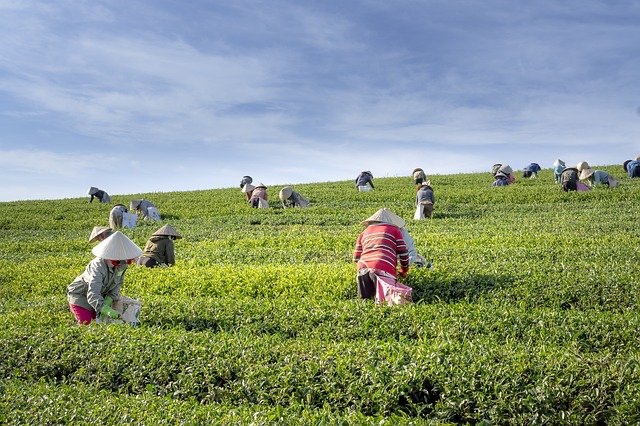
Praying for harvesters

HIGHLIGHT

Matthew 9:37–38 (ESV): 37 Then he said to his disciples, “The harvest is plentiful, but the laborers are few; 38 therefore pray earnestly to the Lord of the harvest to send out laborers into his harvest.”

EXPLAIN

Matthew 9 is a chapter packed with the miraculous exploits of Jesus. Jesus continued to preach and teach in the cities and villages, healing people of various sicknesses and disease, calling different ones to follow him.

In this way, Jesus proclaimed the good news of the kingdom of God. When he saw crowds of people, curious, needy, bewildered and more, Jesus had compassion on them, for he recognized that they were like sheep without a shepherd. So Jesus gave his disciples a prayer request, to pray for more workers for God’s harvest.

The very next thing we read that Jesus did was then to send his disciples out to various villages on their own in groups of two to spread the gospel of God’s kingdom

APPLY

The harvest of souls for God’s kingdom is great, too great for just a few to bear the load. One of our regular prayer requests should be that God would send forth more laborers into the field. And… we should be ready to be part of God’s answer, working as harvesters.

This scripture truly shows us one of the high points of disciple-making. In disciple-making, we train or mentor others to grow in Christlikeness, but the purpose is not merely their personal edification. Rather, they are to become disciplemakers who make disciples who make disciples.

In Luke 10 we find Jesus sending out the seventy-two and then his joy when they return, excited about what God had done through them. It has been suggested that those seventy-two were disciples made by the Twelve in this first disciple-making mission.

RESPOND

Heavenly Father, I pray that you would continue to send forth laborers into your harvest field. Help me to make disciples who make disciples for your glory. In Jesus’ name, Amen.

The big ask

HIGHLIGHT

Matthew 8:10 (ESV): 10 When Jesus heard this, he marveled and said to those who followed him, “Truly, I tell you, with no one in Israel have I found such faith.

EXPLAIN

After recording the Sermon on the Mount, Matthew details several stories of Jesus’ power to heal, including a leper who asked for healing, the centurion who sought healing for his servant, Peter’s mother-in-law who had a fever and many others.

The Roman centurion was unique in that he, as a Gentile, displayed a faith that the Jews had not. He didn’t require Jesus to go with him to heal his servant. He believed that if Jesus simply said the words, it would be done.

And it was.

APPLY

In matters of prayer and faith, we must guard against “name it and claim it” theology. We also understand that God’s will is also not always to heal miraculously of disease, sickness, etc.

Unfortunately, such attempts to be doctrinally correct and not to be presumptive of God’s will and God’s grace may be a smokescreen for our lack of faith.

Do we truly believe God is not only able to take care of our needs, but also that God is willing to do so? Have we demonstrated our faith in action? Have we asked boldly, largely, and expectantly?

RESPOND

Heavenly Father, help me to learn to pray boldly, largely, and expectantly knowing your love for me. In Jesus’ name, Amen.

Breathtaking

HIGHLIGHT

Matthew 5:14 (ESV): 14 “You are the light of the world. A city set on a hill cannot be hidden.

EXPLAIN

Matthew 5-7 is Jesus’ Sermon on the Mount, a manifesto of what it means to be a follower, a disciple, of Christ, a citizen of the kingdom of God.

Jesus began his sermon by addressing a felt need: how can I have a “good” or “successful” life? Jesus’ answer in the form of the nine beatitudes is totally countercultural. The way to lasting happiness and success in God’s kingdom is to go down, not up.

Jesus then transitioned to tell his disciples that they were salt and light to the world. The salt of that day was not pure sodium chloride, but rather had many impurities. It was truly possible for their “salt” to lose flavor and be nasty, good for nothing but to be street filler. Their cities were often fortresses built on hills, high above the rest of the area to aid in the protection of their citizens.

Salt was only good if it had its flavor and was in contact with its world. Light only made sense when it was shining bright for the world to see.

APPLY

Our family has traveled from the midwest to California numerous times. One of my favorite sights on the trip is Albuquerque, New Mexico, especially in the evening. This city is built on a hill and the lights at night make it look breathtaking.

Question: does our light shine so purely and brightly for Christ that others find it breathtaking?

RESPOND

Heavenly Father, help me to live pure and holy for you, a breathtaking testimony in a world of darkness and sin. In Jesus’ name, Amen.

Immersed in God’s Word

HIGHLIGHT

Matthew 4:10 (ESV): 10 Then Jesus said to him, “Be gone, Satan! For it is written, “‘You shall worship the Lord your God and him only shall you serve.’”

EXPLAIN

After Jesus was baptized, before he began his earthly ministry, the Spirit led him into the wilderness to be tempted by the devil. It was essential that Jesus be tempted and overcome.

God was not evil in allowing the devil to tempt Jesus nor in determining that Jesus should be tempted. God did not desire for His Son to choose evil, but to be tested by evil and overcome. So it is in God’s dealings with humanity.

Jesus answered every temptation with “It is written.” He was thoroughly steeped in God’s Word. He thought, spoke, and acted in and by God’s teachings. And the devil could not resist him.

APPLY

It is good to know the difference between right and wrong. It is good to refuse temptation on this basis. It is good to know that the standard for morality is God’s Word. But do we know God’s Word well enough to resist temptation by God’s Word?

Can we say, “I will do or not do thus and so because God’s Word says [blank]”? Do we have such a familiarity with and faithfulness with scripture that it permeates all we do?

RESPOND

Heavenly Father, I desire to be immersed even more so into your Word so that all my thoughts, words, and actions reflect fidelity to you. In Jesus’ name, Amen.